WHAT ARE YOU LOOKING FOR?
WHAT ARE YOU LOOKING FOR?
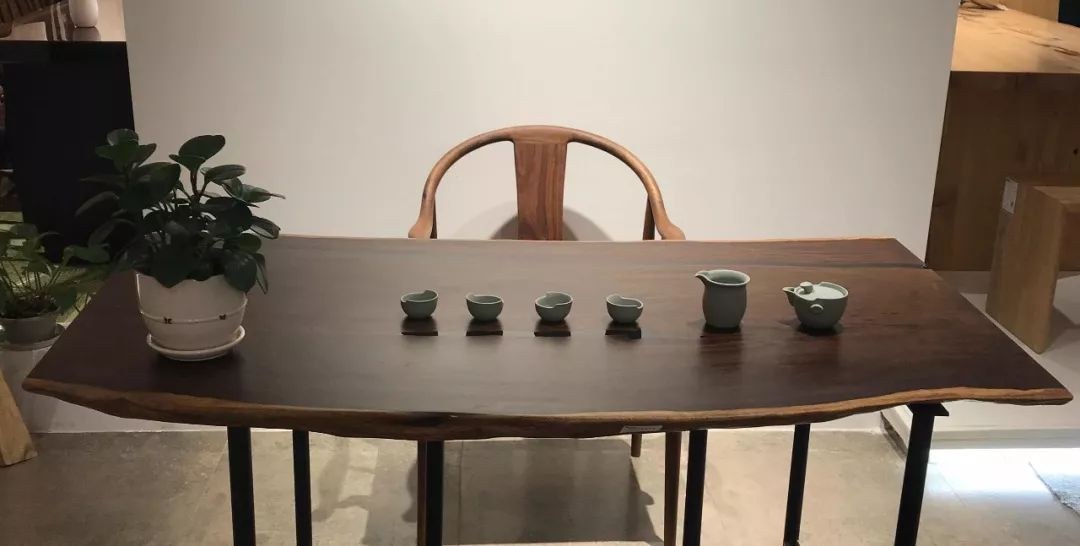
Also known as leadwood, this slow-growing evergreen of tropical Africa is prized for its near-black heartwood, extreme hardness and deep, crystalline lustre.
A Depth That Settles Quietly
Ebony is also known as windmill wood and grey-bark wood.
Botanical name: Combretum imberbe
Phylum: Angiosperms
Class: Dicotyledons
Order: Myrtales
Family: Combretaceae
Genus: Combretum
Species: Leadwood (Combretum imberbe)
Ebony Through the Species
Ebony (Combretum imberbe), also called windmill wood or grey-bark wood, is a plant of the family Combretaceae in the order Myrtales. It grows across tropical Africa and is mainly sourced from Mozambique and neighbouring regions.

Ebony is a large evergreen tree. It loves light and a warm climate, tolerates drought and grows slowly; trunks typically measure 1-2 m in diameter.

Ebony Through the Wood
A clear distinction between heartwood and sapwood is one of ebony's signatures. The heartwood runs from dark brown to coffee, tinged with purple and darkening to black-purple with age, marked by fine stripes of alternating depth. The sapwood is creamy yellow-white, 2~3 cm wide. Growth rings are indistinct.

Ebony is exceptionally hard and dense, tough, tightly structured and strong, resisting wear and decay. It is also a difficult wood to dry: it dries slowly and checks easily, so air-drying is the better choice. Air-dry density is 0.91~1.10 g/cm3.

Ebony Through a Designer's Eye
Crystals in the wood rays catch the light, giving ebony its captivating lustre; together with the wood's own oiliness, this produces a sense of depth that is at once refined and substantial.
Ebony is mostly used for fine furniture, flooring, carving and objets d'art. When choosing ebony pieces, a few points of identification are worth noting: the bark is 1~2 cm thick, rather loose in texture, rough on the surface and hard to strip. The outer bark is dark grey-brown and thin, with regular fissures that flake away in small pieces. The inner bark is purple-brown to black-brown, its cross-section showing stone cells visible to the naked eye, arranged in alternating concentric bands.

SEELAND WOOD LTD
B Block, Southern Ninth Street, Qiaotou Town, Dongguan city, Guangdong Province, China